 Image 1 of 2
 Image 2 of 2
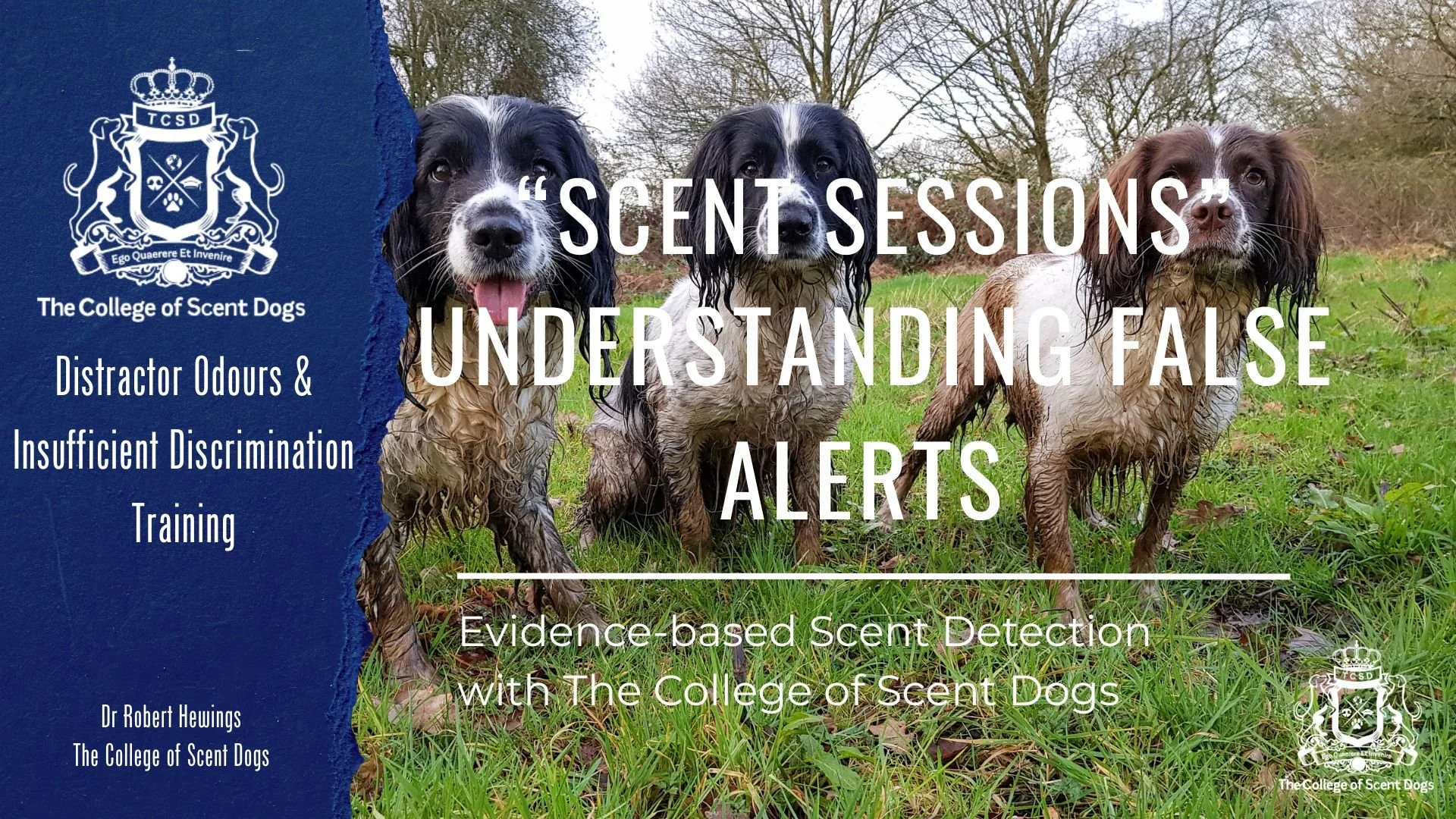
In this 20-minute Scent Session, Dr Robert Hewings examines how weak discrimination training leads directly to false indications. Dogs are reinforced for correct target odour responses, but without systematic exposure to non-target and novel odours, they may begin to alert to anything that feels familiar, new, or contextually relevant.
This session explains why dogs respond to patterns and ambiguity when discrimination is lacking, and why these responses often look confident and convincing. The dog is not making a mistake; it is responding exactly as its learning history has taught it to respond.
You will learn why false alerts caused by poor discrimination are not behavioural faults but predictable training outcomes. By teaching contrast, valuing absence as much as presence, and removing ambiguity from the scent picture, you can prevent guessing, strengthen reliability, and build confident, accurate detection behaviour.
This session forms part of the Understanding False Alerts series and can be watched on its own or as part of the complete set, each designed to help you build clearer training and more trustworthy searches.
When discrimination is clear, confidence follows, and false alerts fade away.
Scent Sessions are drawn from the teaching on The Scent Detection Programme, our City & Guilds Assured instructor credential. If this way of thinking is how you want to work, the full programme is where it lives — three weeks across the year, eighteen places, one cohort. See the City & Guilds Programmes.