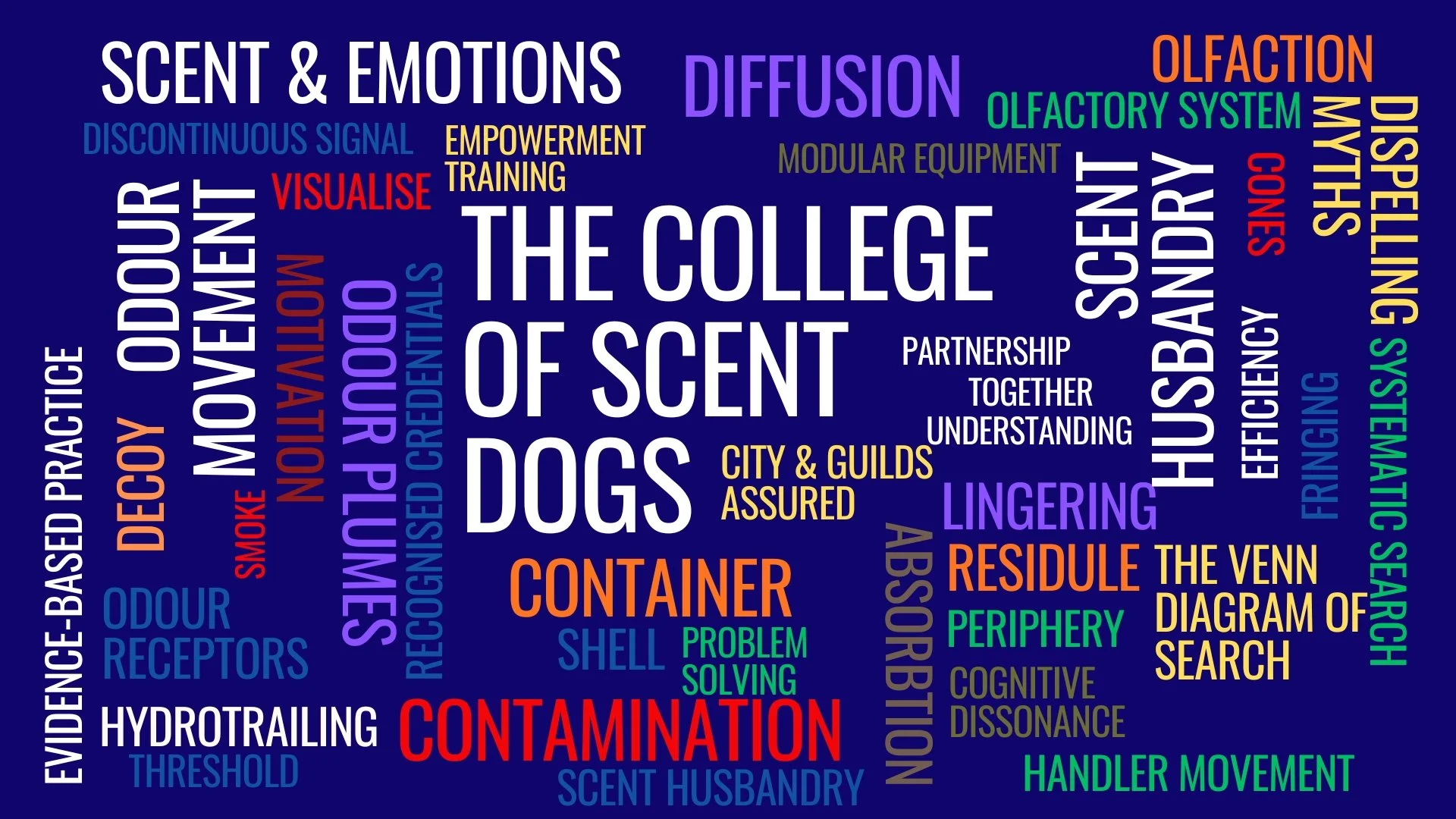
Scent detection training doesn’t have to be complicated; it’s more about clarity. This short introductory video welcomes you to Scent Sessions, a series made to give you focused, valuable insights into how dogs really work with scent. Each session, lasting about 20 minutes, simplifies complex topics into clear, practical tips to help you make better decisions, improve training, and achieve better results for both dogs and handlers. Whether you choose to watch just one session or the entire series, the choice is yours.
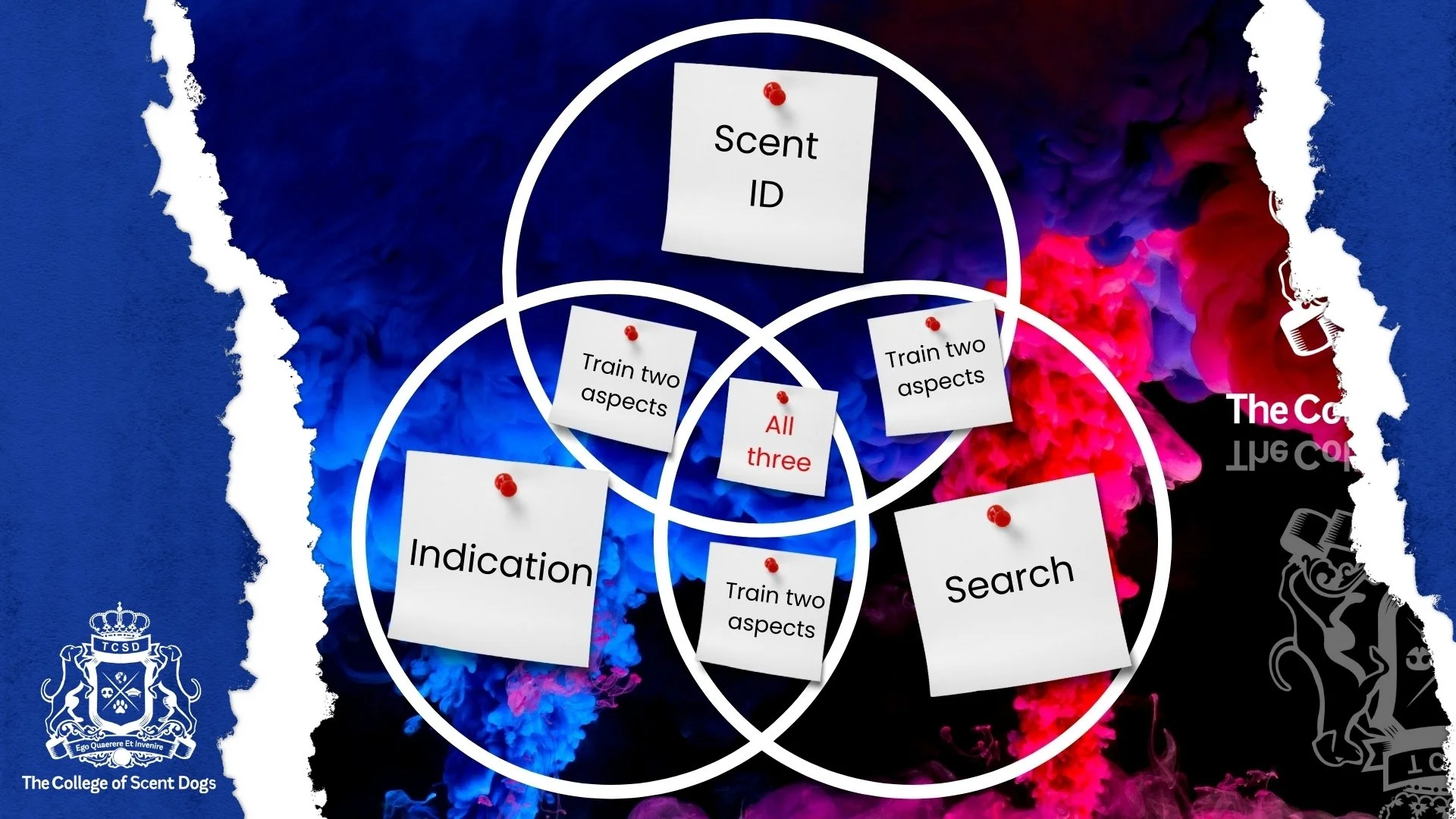
Successful scent work isn’t about choosing one method over another; it’s about understanding what lies at the heart of every great search. This video introduces the Venn Diagram of Search, a powerful visual tool that clarifies how dogs complete a successful search. It highlights the balance among scent identification, indication, and search, and explains why effective training comes from understanding concepts rather than copying techniques.
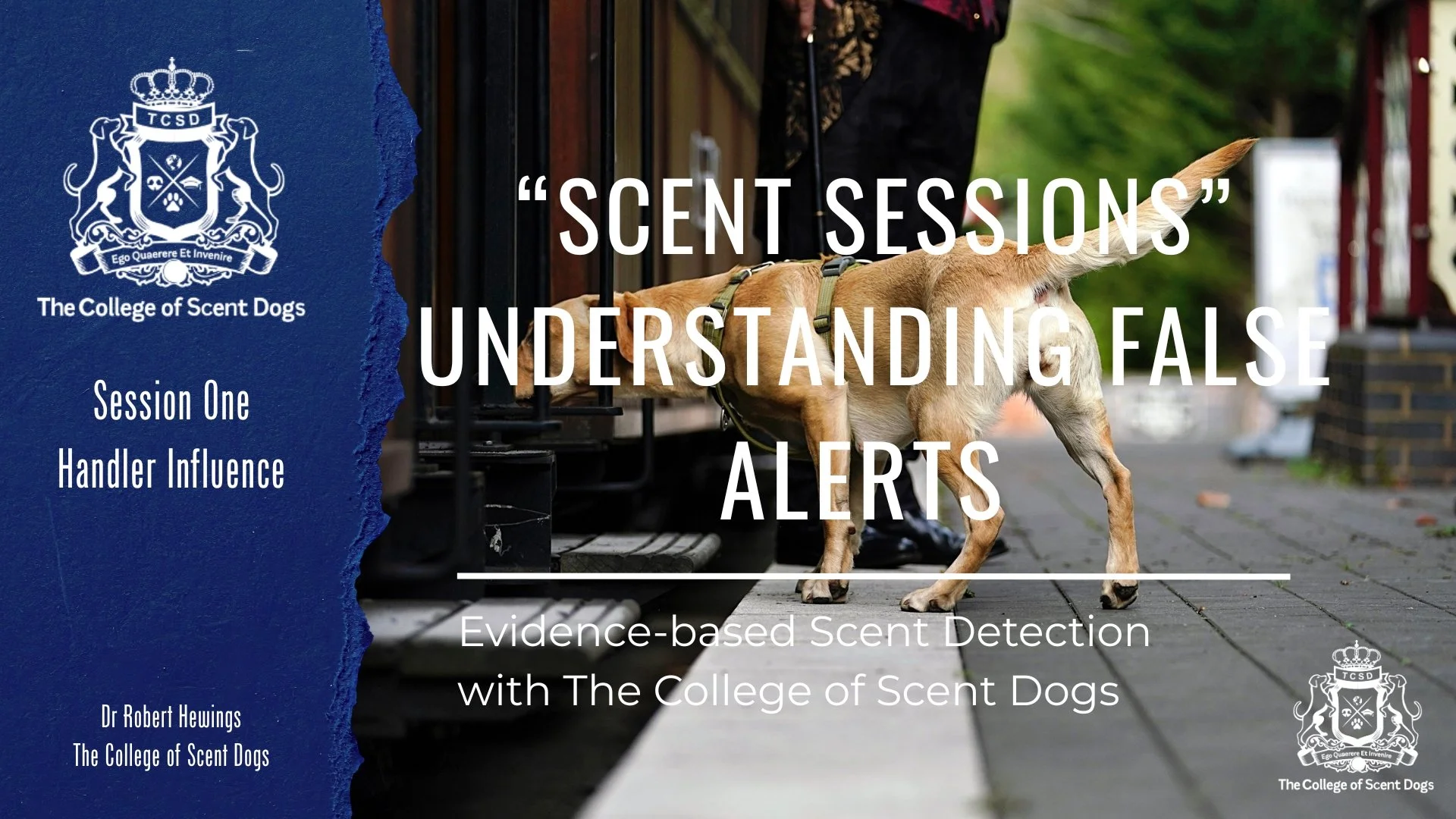
This first session in the Understanding False Alerts series explores the powerful influence handlers have on their dogs’ detection behaviour. Inspired by the famous Clever Hans effect, it encourages you to look beyond the dog and consider how movement, posture, timing, and expectations might act as subtle cues, even when we think we're being completely neutral. If you're aiming for clearer searches, more independent dogs, and truly trustworthy signals, this session provides the perfect foundation to start with.
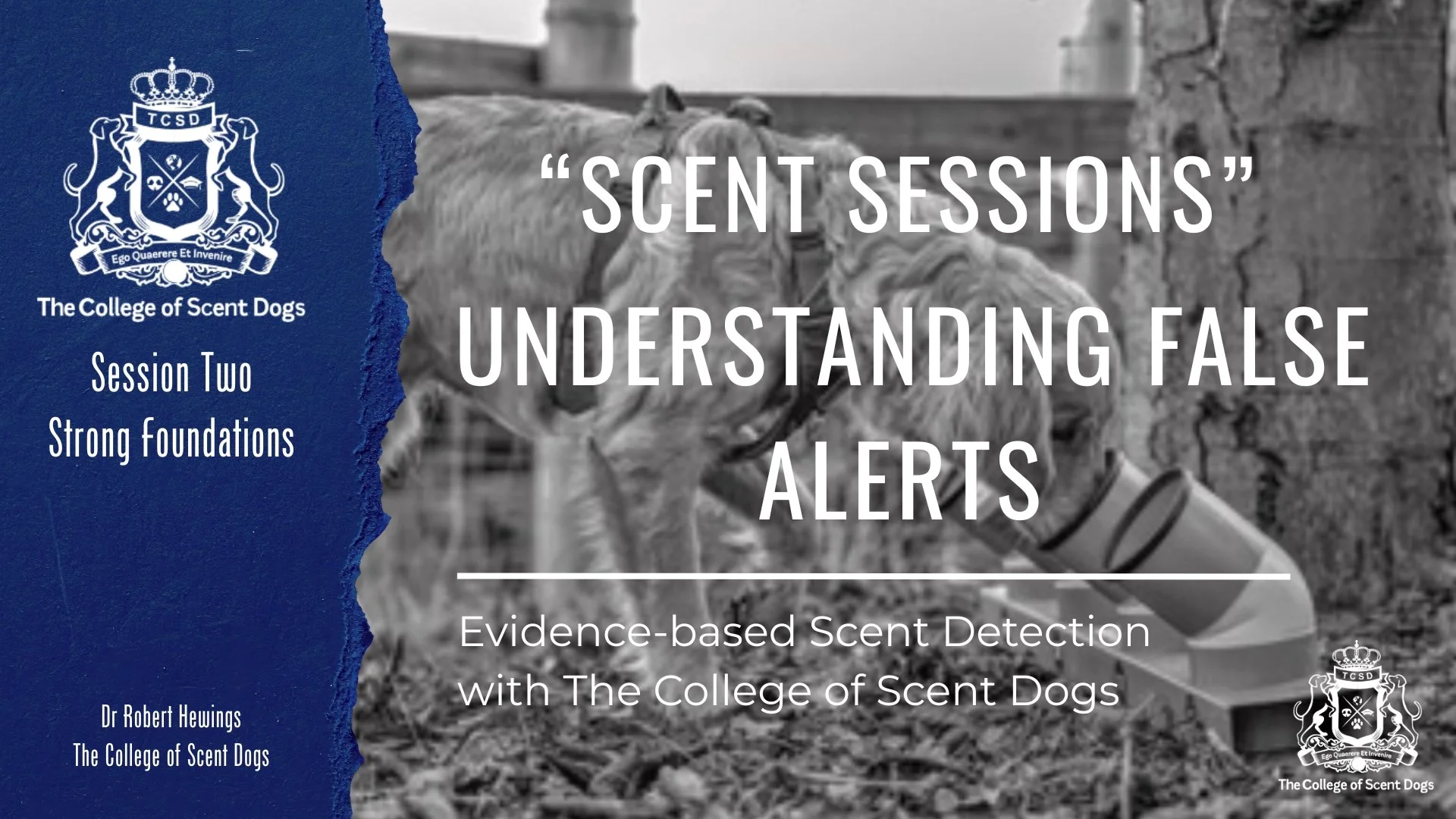
Solid foundations do more than just foster confident searches; they ensure reliability. This Scent Session examines how gaps in early foundational training subtly influence false alerts, often unnoticed by handlers. When dogs are not consistently reinforced at the true odour source, they don’t fail; they adapt.
Our dogs could begin taking shortcuts, responding to pooled scent, lingering odour, or visual cues rather than focusing on precise olfactory cues, where the source is strongest. This session challenges common beliefs about early success and explains why speed and apparent clarity can sometimes mask underlying fragility in the foundation.
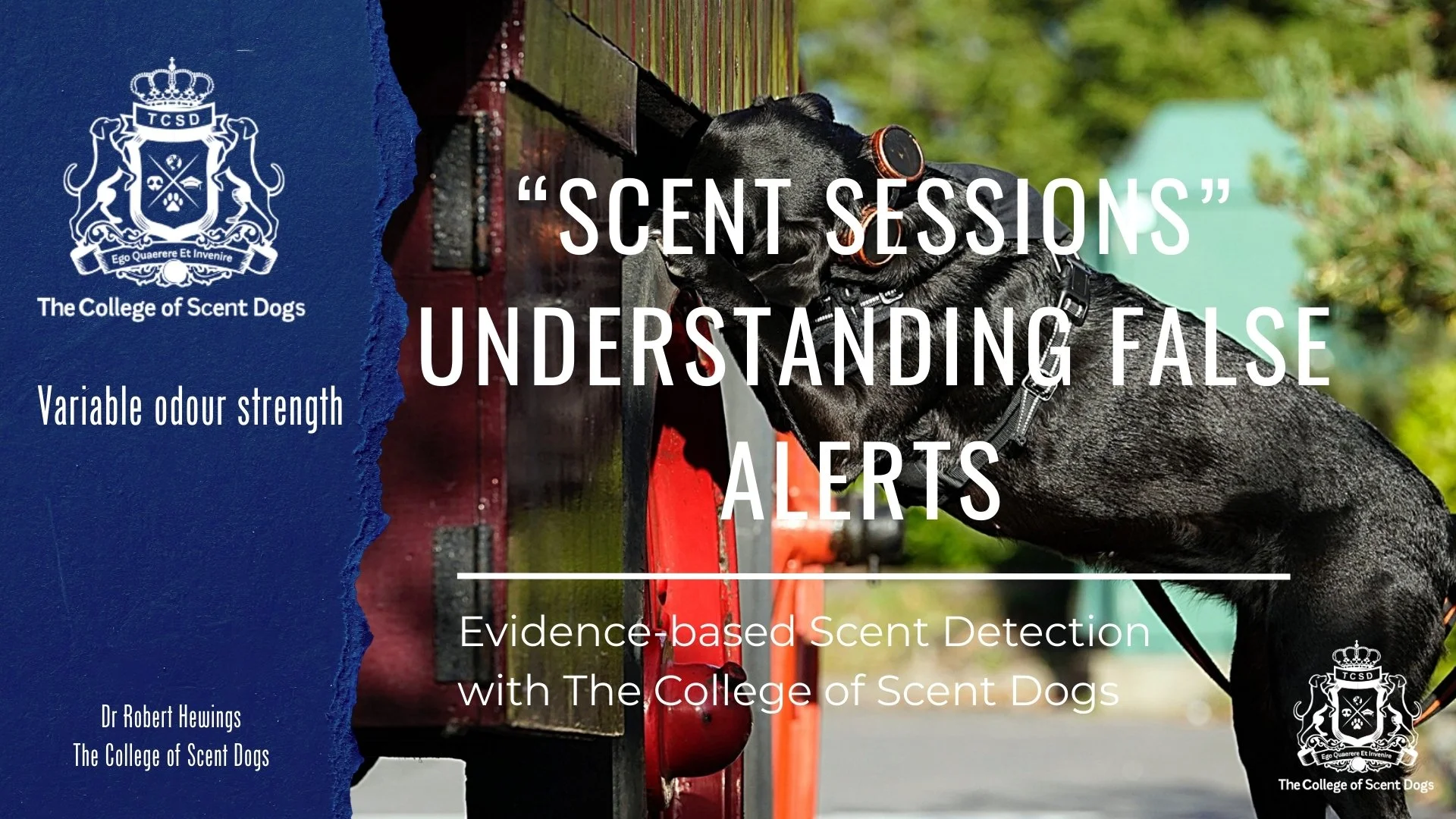
Detection work does not take place in controlled training environments with fresh, powerful odours and perfect airflow. It happens where odour is moving, disrupted, strong, or weak. Without deliberate exposure to variable odour strength, we teach dogs that certainty always exists, that odour is always obvious, and that the indication is always rewarded. In reality, uncertainty is the norm; if we fail to train for it, the dog may give false indications.
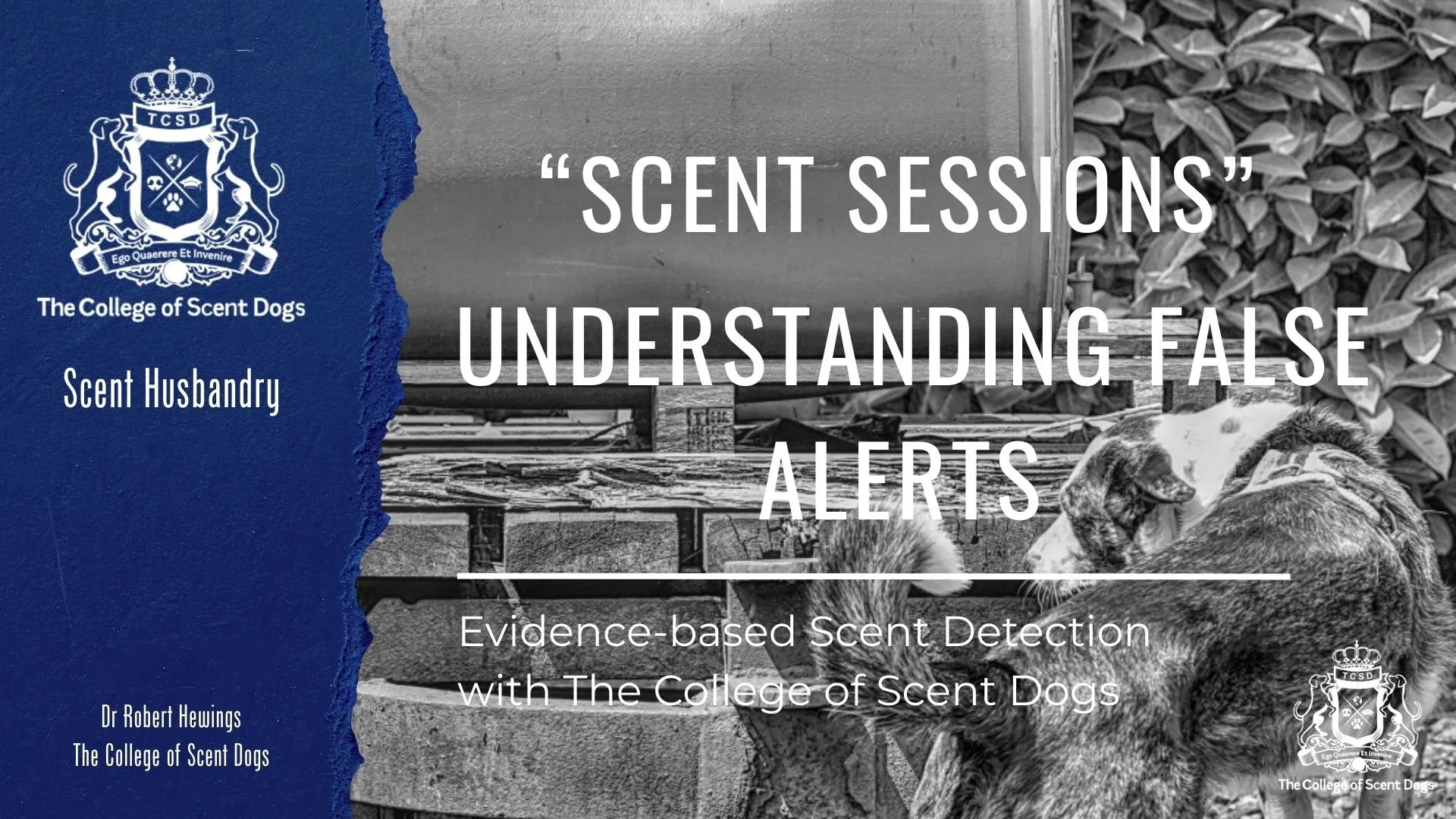
Poor scent husbandry can cause issues even before the dog starts its search. When hides are handled carelessly or residual odours are left in the environment, those careless moments become the "hides" that the dog is trained to find. This can cause the dog to be called away from its task, which might lead to confusion, frustration, and misunderstandings. In scent detection, managing odour carefully isn't just good practice; it's absolutely vital to support the dog's learning and confidence.
In scent detection, clarity is frequently confused with confidence. A dynamic sit, a sudden freeze, or a textbook indication reassures handlers and trainers alike. However, what if that clarity is not solely attributable to odour? What if the dog is responding not to scent, but to pressure? Today, we shall examine how excessive pressure during indication training systematically increases the likelihood of false indications, and why some of the most convincing alerts may, in fact, be the least dependable.